You are not paying to sit in silence
You are being taught
Meditation taught as a tool for a more complete life. We explain the why and the science, draw technique from Western and Eastern meditation, mindfulness, Tao and Buddhism, and help you carry the clarity into work, relationships and horsemanship — guidance from 25 years of practice, not a recording you follow alone.
A session is teaching —
not a paid hour of sitting
Anyone can sit on a cushion for free. What you pay for is the guidance — four things a recording cannot give you.
01 · The why
Never just “breathe”
Every step comes with what it does to your mind — so you can repeat it alone.
02 · The science
Proof, not just tradition
We show what research says is happening in your brain and body.
03 · The toolkit
Technique, never dogma
East and West, mindfulness, Tao, Buddhism — the methods, not the religion.
04 · The point
Carried into life
Clarity for your work, relationships and time with your horse.
Most people try to meditate.
We begin with relaxation instead.
Without relaxation, you are not meditating. You are sitting with your stress in a quiet room. The body is still tense, the nervous system is still alert, and the mind has nothing to settle into.
This is why most beginners give up. They are trying to do the second step before the first one has happened.
In my method, most people sleep better after the very first session — because relaxation alone is already transformative. The rest of the practice builds from there.
The old approach
Try to empty your mind → Struggle → Give up
The Empower method
Relax the body first → Mind follows naturally → Awareness develops
"Meditation is not a hobby. It is a tool — for clarity, for decisions, for living fully in the real world."
The mind is like
water with impurities
Picture a glass of water with sediment stirred through it. Cloudy — you cannot see through it, and you cannot think clearly through it. That is the mind under stress.
Meditation does not remove the sediment. It brings the stillness that lets it sink. As it settles, clarity appears on its own — because you stopped stirring.
That clarity is where clear thinking and good decisions begin. Meditation is not passive. It is preparation for life.
Stop stirring — clarity settles on its own
Before — mind stirred
Reactive decisions. Emotional noise. Endless rumination. Effort that leads nowhere.
After — impurities settled
Clarity under pressure. Decisions from insight. Presence in your work, relationships and body.
Five sources —
one practical method
We are not loyal to one tradition. We borrow whatever technique works — from Western and Eastern meditation, from mindfulness, from Tao and from Buddhism — and leave the religion and dogma behind. Each one gives you a different doorway into the same full state of meditation.
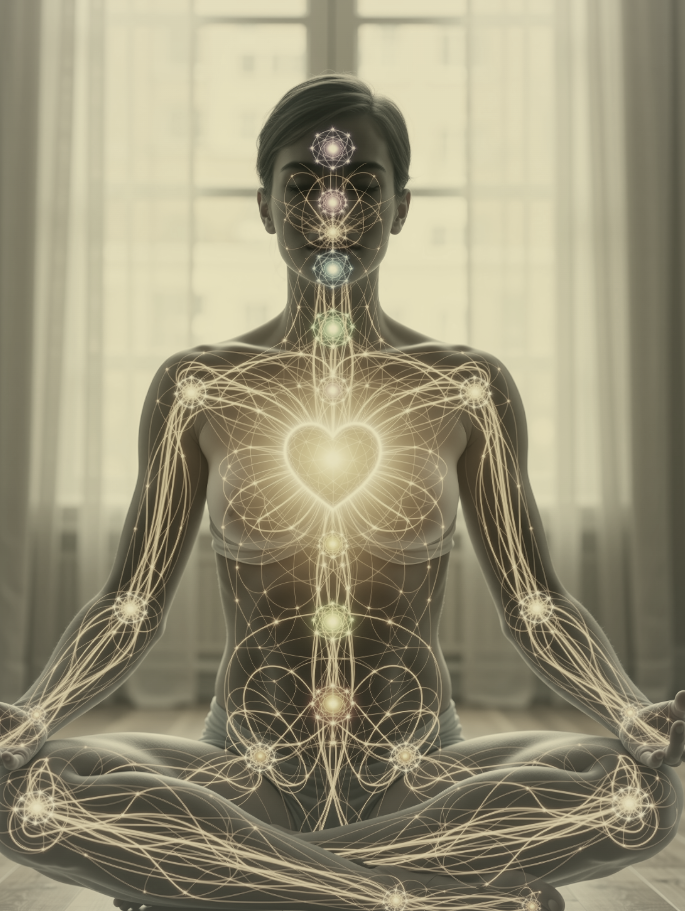
Western Meditation — Relaxing into a Guiding Voice
Mostly voice-guided. My voice leads you, step by step, into relaxation — so you are never left wondering whether you are “doing it right.” You follow, the body lets go, and over time you carry that skill on your own.
Visualisation plays a small, supporting role — and it is mostly about your body, not a faraway place: soft attention on your hands, your breath, your shoulders. The simpler the image, the faster the mind settles.
Voice-guidedGuided relaxationSimple body awarenessEastern Meditation — Training the Observer
Eastern traditions train the mind to observe itself without identification. Notice when your mind wanders — and gently return. Each return is the practice. Not the stillness. The return.
This builds the witness mind: the part that watches thoughts without being swept into them. Over time, this changes not just your meditation but every area of life — how you react, how you decide, how present you actually are.
MindfulnessPresent-moment awarenessReleasing wandering thoughts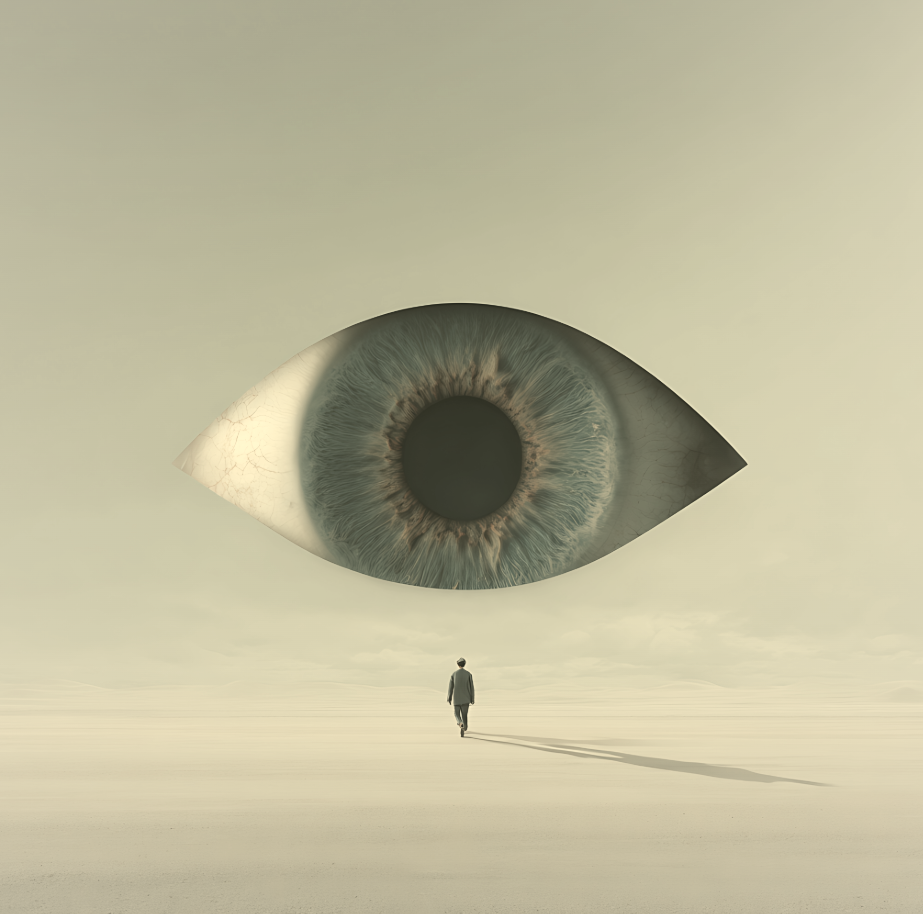
Three more tools we draw on
Mindfulness, Tao and Buddhist technique — used as mental training, never as belief you are asked to adopt.
Mindfulness
Present-moment awareness
Returning attention to what is happening right now, again and again. The simplest tool and the most portable — you can use it in a meeting, a hard conversation, or in the saddle.
Tao
Effort without strain
The Taoist principle of wu-wei — doing without forcing. Meditation deepens the moment you stop trying to make it happen. “Strive, but do not strain.” This is how practice stops feeling like work.
Buddhism
Technique, not religion
Breath-counting, loving-kindness, non-attachment to passing thoughts. We use these as mental-training tools — you do not need to adopt any belief for them to work.
You do not need to study five philosophies — that is my job. After 25 years I can see which tool you need in the moment: simple attention on the body to settle a racing mind, a breath count to steady it, a Taoist release when you are trying too hard — and hand it to you at the right time. That guidance is what turns five traditions into one path you can actually walk.
Three stages —
from beginner to mastery in real life
Not learning to sit still — a guided path in three stages. By the third stage the aim is integration: carrying the same clarity and awareness into your work, your relationships and your horsemanship, until it is simply how you live.
Body-Mind Calibration & Awareness Rebuilding
Most people sleep better after session one.
Mental Deconstruction & Thought Renewal
Take back the controls of your mind.
Wisdom Integration & Life Internalisation
Meditation becomes who you are.